
Toni Sims
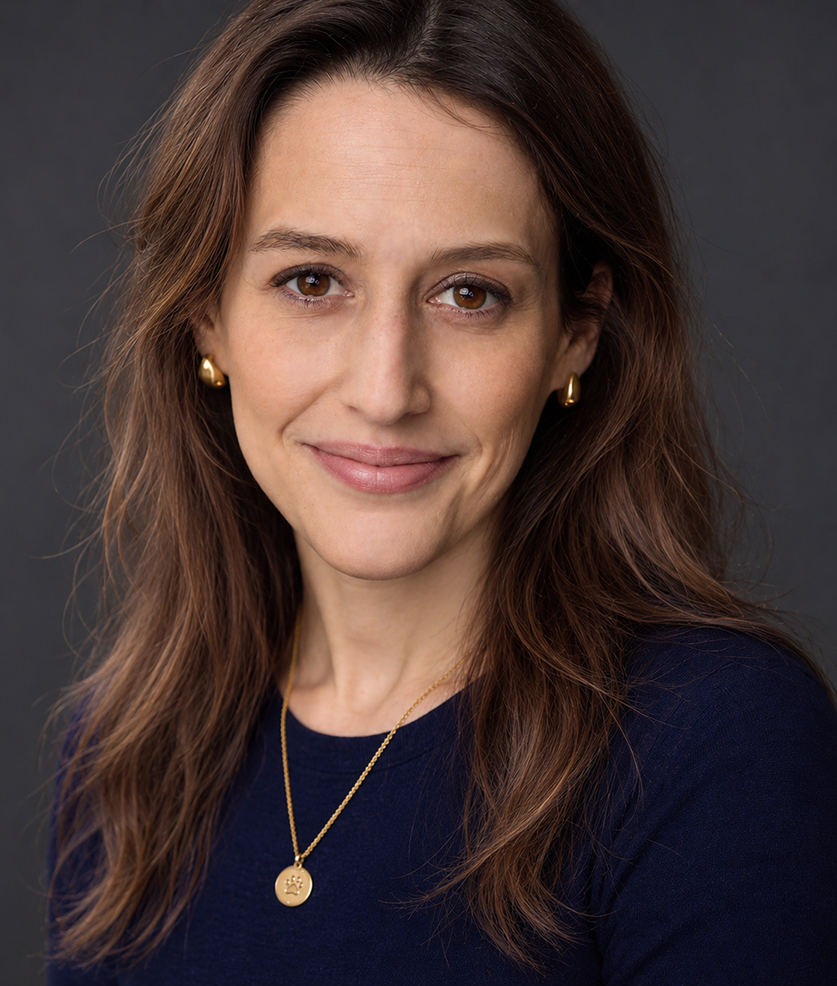
I am a researcher at the Center for Mind, Ethics, and Policy at New York University, where I investigate the boundaries of minds and moral concern. My work considers both biological and digital minds, with a particular focus on consciousness, sentience, and agency. I am interested in the ways humans reason about nonhumans and the ways in which new technologies challenge our assumptions about cognition, embodiment, agency, and personal identity.
Research
Nonhuman consciousness and moral status
I investigate consciousness and moral status in nonhuman animals and digital minds. I focus on how we should reason under uncertainty about other minds, especially when familiar assumptions begin to break down.
Minds, bodies, and selves
I am interested in how minds are individuated and how identities are shaped by embodiment, environmental engagement, and social interaction. My work in this area examines questions about personal identity, body ownership, and the porous boundaries between individuals.
Public philosophy
I am interested in making abstract philosophical questions accessible to broader public audiences, and in clarifying the assumptions underlying debates about new technologies.

Publications
Long, R., Sebo, J., Butlin, P., Plunkett, D., Campbell, R., Beasley, C., Saad, B., and Sims, T. Studying AI Welfare Empirically (2026).
Sebo, J., White, A., & Sims, T. “One Health and Multispecies Urban Infrastructure.” In J. Kotzmann & K. Woolaston (Eds.), One Health and the Law: Existing Frameworks, Intersections and Future Pathways. Cambridge University Press (forthcoming in 2026).
Sims, T., Franks, B., Ryan, E., & Sebo, J. “From Pandas to Corals: Assessing the Animal Welfare Impacts of Assisted Reproduction Technologies.” Journal of Applied Animal Ethics Research (2025).
Sims, T. and Sebo, J. “Ethical Oversight for Insect Research.” Zoophilologica (2025).
Long, R., Sebo, Jeff, & Sims, T. “Is There a Tension between AI Safety and AI Welfare?” Philosophical Studies (2025).
Sebo, J., Dietz, E., & Sims, T. “Towards a Global Ban on Industrial Animal Agriculture by 2050” Environmental Law (2025).
Andrews, K., Birch, J., Jeff Sebo, & Sims, T. “Background to the New York Declaration on Animal Consciousness” (2024).
Long, R., Sebo, J., Butlin, P., Finlinson, K., Fish, K., Harding, J., Pfau, J., Sims, T., Birch, J., & Chalmers, D. “Taking AI Welfare Seriously.” arXiv (2024).
White, A., Sebo, J., Franks, B., Minelli, A., Wyman, K., Krupa, D., Morris, V., & Sims, T. “Wild Animal Welfare in Local Policies on Land Use and the Built Environment.” Guarini Center on Environmental, Energy and Land Use Law (2024).
Adleberg, T., Franks, B., Minelli, A., Sebo, J., Wyman, K., & White, A. Considering Wild Animal Welfare in Benefit-Cost Analysis [Public Comment to OIRA] (2023).
Thompson, M., T. Adleberg, S. Sims, and E. Nahmias, “Why Do Women Leave Philosophy? Surveying Students at the Introductory Level” Philosophers’ Imprint 16:6 (2016).
Adleberg, T., M Thompson, and E. Nahmias, “Do men and women have different philosophical intuitions? Further data.” Philosophical Psychology 28:5 (2014).
Adleberg, T. “The Thought Experiments Are Rigged: Mechanistic Understanding Inhibits Mentalistic Understanding,” MA thesis under the direction of Eddy Nahmias at Georgia State University (2013).
Towards a Global Ban on Industrial Animal Agriculture by 2050
We propose a pathway towards a global ban on industrial agriculture by 2050, which proceeds via informational, financial, regulatory, and just transition policies that seek to gradually scale down industrial animal agriculture, gradually scale up alternative food systems, and support everyone as much as possible along the way.
Highlights
Could A.I. Be Conscious? It’s Definitely Possible.
While some people may think I have an inflated sense of AI capabilities, I wonder whether others have an inflated sense of what consciousness requires. In this op-ed for the Times, I explain why we cannot rule out the possibility of AI consciousness. And since we can’t rule it out—and the stakes are high—we must prepare for the possibility.
Read in The New York Times
Taking AI Welfare Seriously
We argue that there is a realistic possibility that some AI systems will be conscious and/or robustly agentic in the near future. That means that the prospect of AI welfare and moral patienthood is no longer an issue only for sci-fi or the distant future. It is an issue for the near future, and AI companies and other actors have a responsibility to start taking it seriously.
Contact
For research collaboration or writing inquiries, please contact: toni.sims@nyu.edu
